News
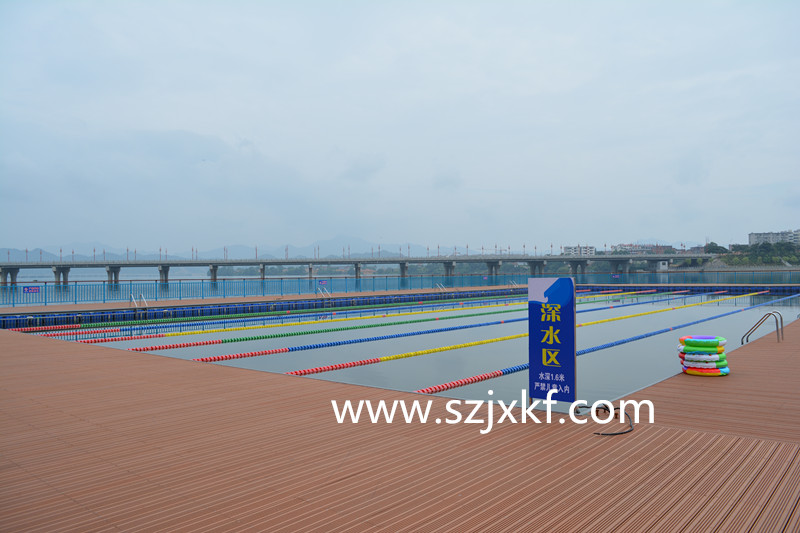
A water park is a water-themed public venue equipped with various recreational facilities for visitors. It was introduced to China after the reform and opening-up. With the rapid growth of China’s economy and people’s living standards, the tourism industry has developed rapidly. Water parks have become increasingly popular and well-received by the public.
Water parks feature a wide variety of recreational projects with different layouts by operators. The typical land-to-water area ratio for ordinary water parks is 6:4.
Both water amusement pools and standard swimming pools require circulating water purification treatment. Since China has not yet issued independent water treatment regulations specially for water amusement pools, their circulating filtration design usually refers to the Technical Specification for Water Supply and Drainage of Swimming Pools. However, not all treatment standards can be fully applied to water amusement pools.
Difference 1: Functional Water Supply System
Standard swimming pools generally do not adopt a functional water supply system, while it is essential for water amusement pools.
In addition to the circulating water purification system, water amusement pools must be equipped with an independent functional water supply system. It provides dedicated water for amusement facilities, including lubricating water for water slides and recreational water for water umbrellas, water mushrooms and other interactive installations.
The functional water supply system shall never share equipment with the pool circulating purification system.
Especially for water slide lubrication water pumps, standby pumps must be configured to ensure continuous water supply for safety reasons. Slide water supply pumps must be designed independently and shall not be shared with other water supply systems.
Difference 2: Pool Water Circulation Cycle
The water circulation cycle varies for standard swimming pools according to usage purposes. Similarly, water amusement pools also adopt different circulation cycles determined by function, water depth, passenger load and other factors.
Difference 3: Overall Design of Water Amusement Pools
Standard swimming pools are mainly for swimming and training. Water depth is designed for different groups with little difference between two ends. For pools with a slope toward the drain outlet, the gradient is generally 1%–3%, not exceeding 3%.
Water amusement pools are designed for playing, entertainment and cultivating people’s water-friendly awareness. The water depth gradually increases from the shallow end to the deep end, with overall shallower depth than standard pools and a slope no more than 2%.
This depth layout serves safety purposes: deep-water areas with water slides provide buffer protection for participants; meanwhile, thrilling facilities are separated from crowded shallow-water zones to avoid safety accidents.
Water park projects are diverse in layout. The design principle is to arrange facilities gradually from mild thrilling areas to high-thrilling zones. Visitors with basic swimming skills can then experience more exciting items such as wave pools. This layout also helps divert crowds for better management. For safety considerations, different amusement zones are usually set up independently.
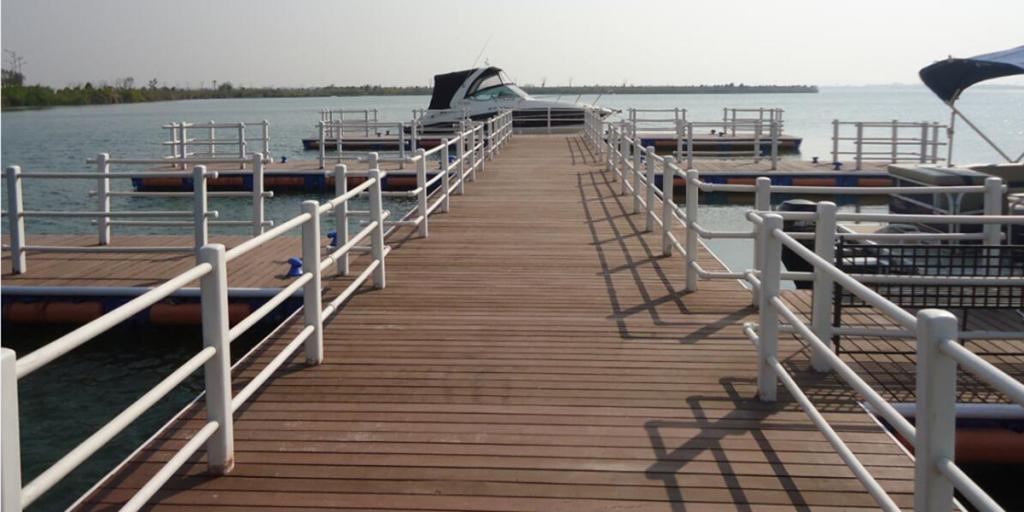
It features complete functions for yacht berthing, cleaning, maintenance, as well as passenger boarding and disembarking. Traditionally, yacht marinas were mostly constructed with reinforced concrete. However, affected by frequent water level fluctuations, such fixed structures often fail to meet actual usage demands. Floating marinas can adapt to varying water levels and keep a constant height above the water surface, making them increasingly favored by users.
Designers take into account vessel type, water depth, tides, current conditions, wind and wave intensity to customize the optimal floating yacht marina. The platform surface adopts a non-slip design and can be laid with wooden planks as required. It delivers reliable quality and safety while offering the most cost-effective solution for marina construction.
Nevertheless, modular floating pontoons are mainly suitable for small and medium-sized yacht marinas. Large terminals such as cargo ports require other high load-bearing structural materials.
Floating pontoons form the main structure of the floating marina. Their buoyancy and load capacity are fully adequate for small and medium-sized yacht marinas. If a single-layer structure cannot meet the demand, a double-layer pontoon structure can be adopted and reinforced with steel frames on both sides, greatly enhancing overall buoyancy, stability and safety.
Pontoon-based floating marinas can be customized in different sizes according to yacht dimensions. Wooden deck planks can be installed optionally to effectively extend the service life of the marina.
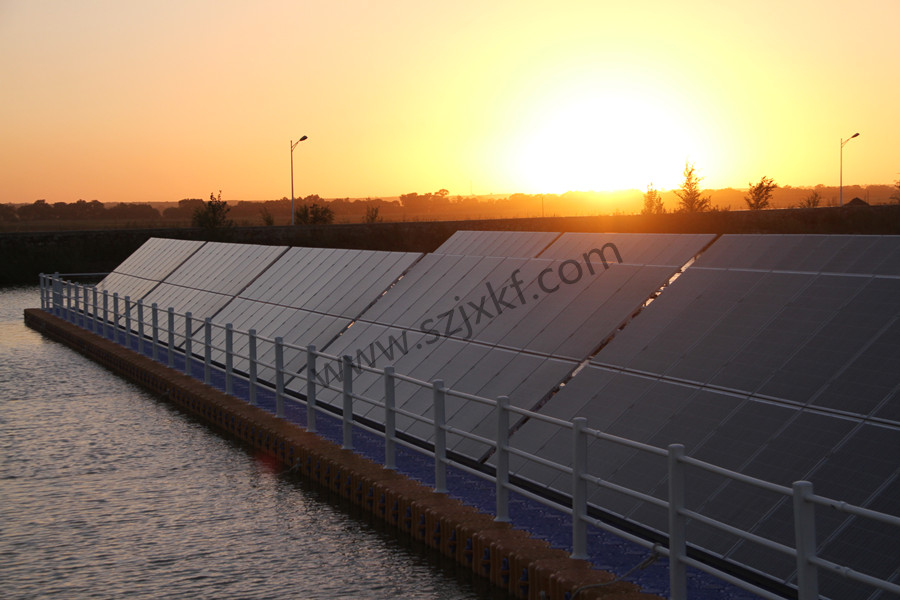
In recent years, water-based photovoltaic power generation, as a new form of photovoltaic application, has attracted widespread attention. It has been explored and practiced in many regions across the country, with the number of water-based photovoltaic projects continuously increasing. The entire industry is accumulating momentum, laying the foundation for the rapid development of water-based photovoltaics.
Floating photovoltaic platforms refer to the construction of floating photovoltaic power stations on water bodies such as ponds, small lakes, reservoirs, and water storage tanks. They have six core advantages:
Reducing Land Occupation
It effectively saves land resources, avoiding the occupation of valuable land space, which is more environmentally friendly and flexible compared with traditional ground-mounted photovoltaic power stations.
Improving Power Generation Efficiency
The water body has a cooling effect on the photovoltaic modules, which can suppress the temperature rise of the modules, thereby increasing the power generation efficiency by 10% - 15% compared with ground or roof-mounted photovoltaic systems.
Lowering Engineering Costs
It eliminates the need for large-scale civil engineering such as foundation construction, greatly reducing the overall construction cost; at the same time, the later maintenance is simple, and the operation cost is low.
High System Reliability
Adopting high-quality floating components, it has strong corrosion resistance, UV resistance, and can adapt to harsh water environments such as different water levels and water quality. It is stable and durable, and the service life can reach more than 20 years.
Environmental Protection and Energy Conservation
The floating platform and photovoltaic modules are made of environmentally friendly materials, which do not produce harmful substances, conform to national environmental protection standards, and achieve green and low-carbon power generation.
Flexible and Versatile
It can be freely combined according to actual needs, adapted to different water areas and project scales, and can be moved and reused, with strong adaptability.