News
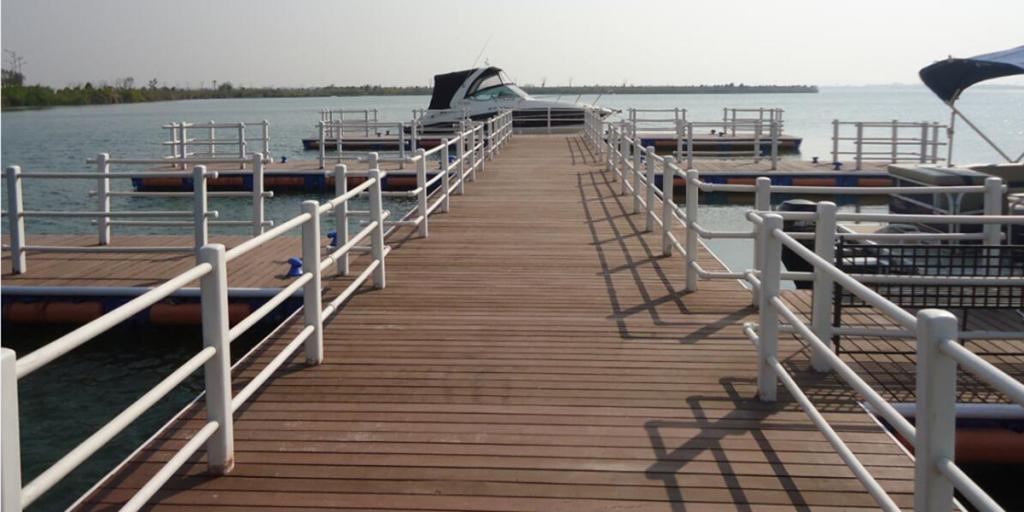
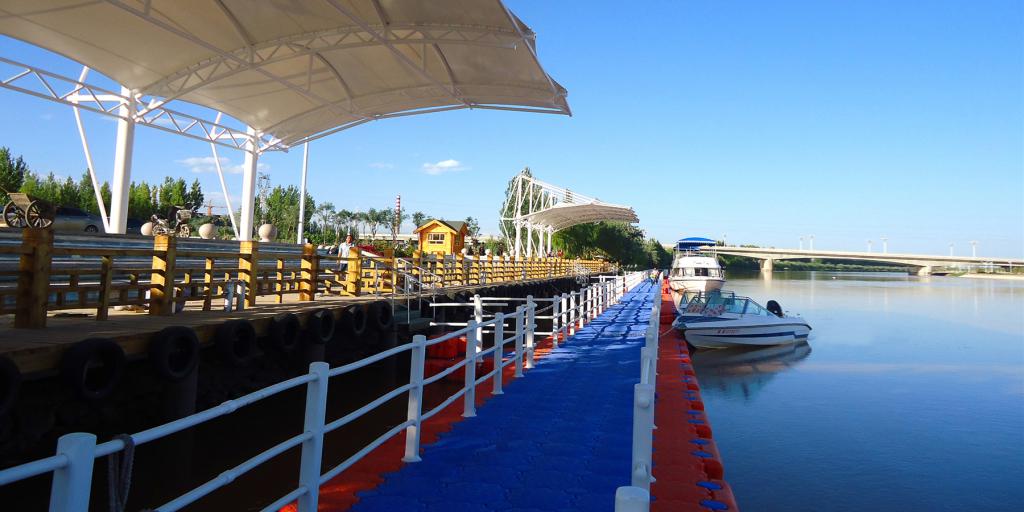
It features complete functions for yacht berthing, cleaning, maintenance, as well as passenger boarding and disembarking. Traditionally, yacht marinas were mostly constructed with reinforced concrete. However, affected by frequent water level fluctuations, such fixed structures often fail to meet actual usage demands. Floating marinas can adapt to varying water levels and keep a constant height above the water surface, making them increasingly favored by users.
Designers take into account vessel type, water depth, tides, current conditions, wind and wave intensity to customize the optimal floating yacht marina. The platform surface adopts a non-slip design and can be laid with wooden planks as required. It delivers reliable quality and safety while offering the most cost-effective solution for marina construction.
Nevertheless, modular floating pontoons are mainly suitable for small and medium-sized yacht marinas. Large terminals such as cargo ports require other high load-bearing structural materials.
Floating pontoons form the main structure of the floating marina. Their buoyancy and load capacity are fully adequate for small and medium-sized yacht marinas. If a single-layer structure cannot meet the demand, a double-layer pontoon structure can be adopted and reinforced with steel frames on both sides, greatly enhancing overall buoyancy, stability and safety.
Pontoon-based floating marinas can be customized in different sizes according to yacht dimensions. Wooden deck planks can be installed optionally to effectively extend the service life of the marina.
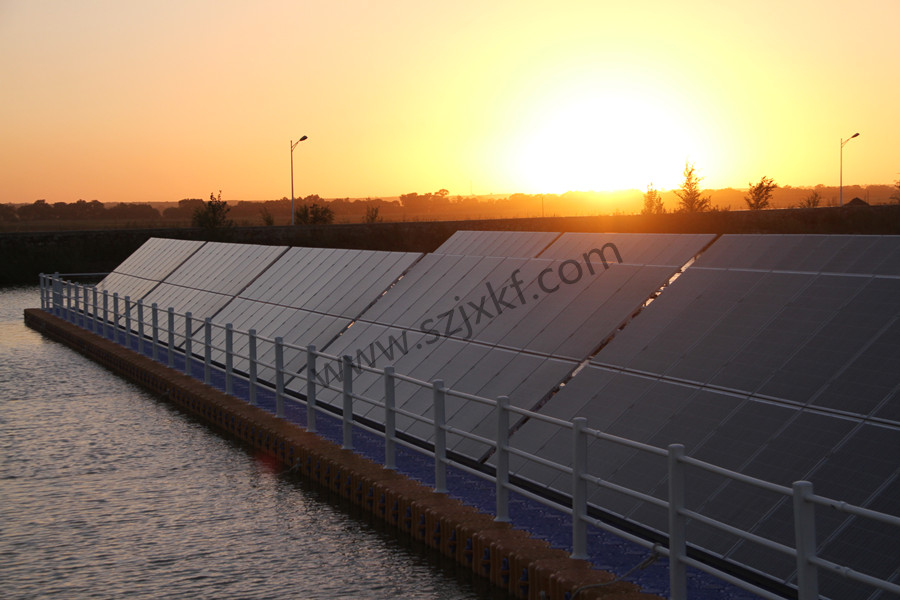
In recent years, water-based photovoltaic power generation, as a new form of photovoltaic application, has attracted widespread attention. It has been explored and practiced in many regions across the country, with the number of water-based photovoltaic projects continuously increasing. The entire industry is accumulating momentum, laying the foundation for the rapid development of water-based photovoltaics.
Floating photovoltaic platforms refer to the construction of floating photovoltaic power stations on water bodies such as ponds, small lakes, reservoirs, and water storage tanks. They have six core advantages:
Reducing Land Occupation
It effectively saves land resources, avoiding the occupation of valuable land space, which is more environmentally friendly and flexible compared with traditional ground-mounted photovoltaic power stations.
Improving Power Generation Efficiency
The water body has a cooling effect on the photovoltaic modules, which can suppress the temperature rise of the modules, thereby increasing the power generation efficiency by 10% - 15% compared with ground or roof-mounted photovoltaic systems.
Lowering Engineering Costs
It eliminates the need for large-scale civil engineering such as foundation construction, greatly reducing the overall construction cost; at the same time, the later maintenance is simple, and the operation cost is low.
High System Reliability
Adopting high-quality floating components, it has strong corrosion resistance, UV resistance, and can adapt to harsh water environments such as different water levels and water quality. It is stable and durable, and the service life can reach more than 20 years.
Environmental Protection and Energy Conservation
The floating platform and photovoltaic modules are made of environmentally friendly materials, which do not produce harmful substances, conform to national environmental protection standards, and achieve green and low-carbon power generation.
Flexible and Versatile
It can be freely combined according to actual needs, adapted to different water areas and project scales, and can be moved and reused, with strong adaptability.
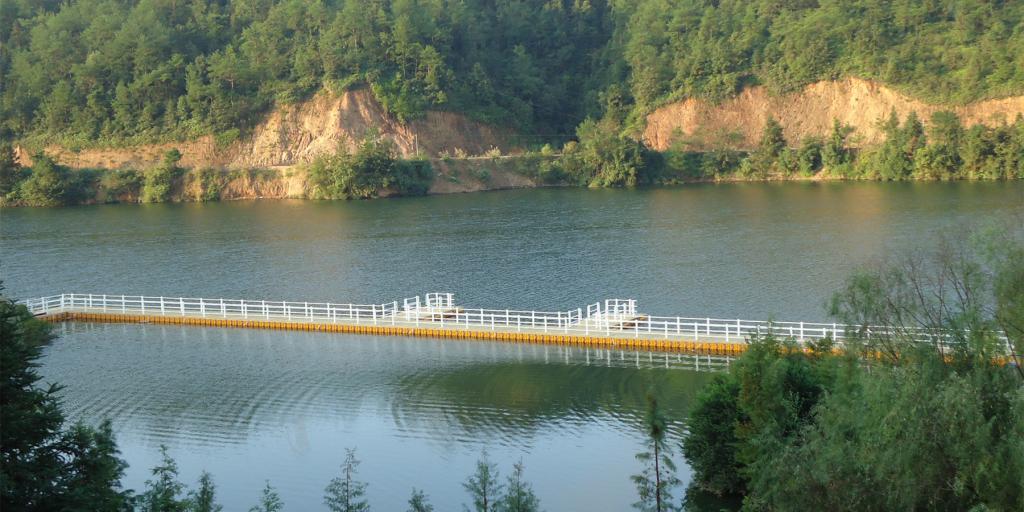
People are eager to see a river ecological landscape with blue sky, clear water, green trees, swimming fish and shrimp, and circling birds. The water-front platform provides an excellent space for people to get close to aquatic organisms and understand the water environment.
Nowadays, unique-style water-front platforms built with floating buoys can be seen in many tourist landscapes, such as floating docks, yacht marinas, landscape floating bridges, water stages, floating swimming pools, water houses, ecological floating islands and a series of water projects. These floating facilities are deeply loved by tourists and have been increasingly widely used in the tourism industry.
The application of floating platforms in the tourism industry satisfies people’s inherent desire to get close to water. For people living in cities with dense high-rise buildings, experiencing water life on the water surface is a long-cherished dream. The water landscape platforms built with floating buoys allow tourists to truly stay on the water, enjoy the water scenery, and feel the peace and comfort away from the hustle and bustle of the city.
In addition, the use of floating platforms can further tap and utilize the water space, help expand the urban space, and promote the rational development and utilization of water resources.
Internationally, more and more metropolises have started the construction of water recreation facilities and the development of water tourism. Relying on water resources to show the urban style, water tourism projects have become a unique scenic line of the city. They are not only an organic part of the urban image, but also bring good economic and ecological benefits. These demands have also become an important driving force for the development of the water facility construction industry.
Nowadays, floating buoys can often be seen in water areas such as lakes, coastal waters (for floating solar platforms) and beaches. What functions do floating buoys have, and what about their performance?
Floating buoys are widely used in various fields. For example, they are applied in floating docks, water platforms, yacht marinas, etc. The emergence of floating buoys has made the construction of water-related facilities such as floating docks, water platforms and yacht marinas much simpler and more convenient.
What about the performance of floating buoys? Due to the corrosion-resistant and anti-oxidation materials used in their production, floating buoys have excellent corrosion resistance and oxidation resistance. In addition, they have a strong load-bearing capacity, able to bear a weight of up to 350kg. It is precisely because of these excellent performance advantages that floating buoys are widely used in water docks, water platforms, yacht marinas and other fields.