News
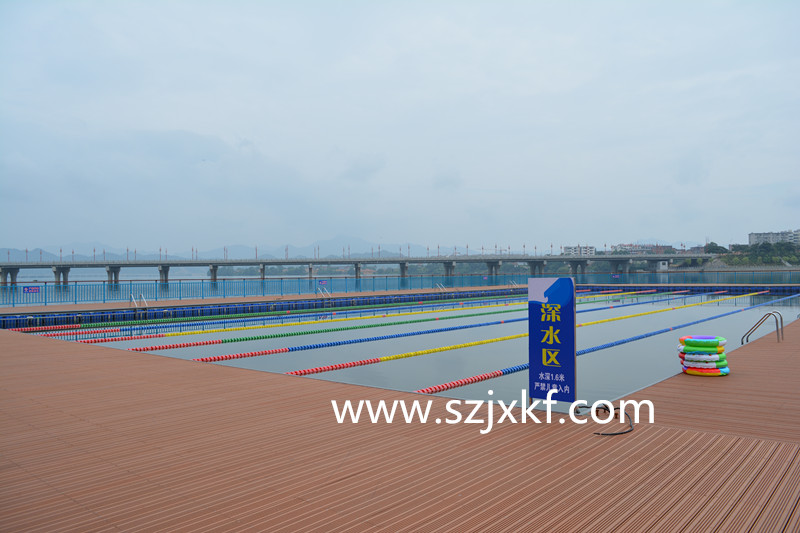
A water park is a water-themed public venue equipped with various recreational facilities for visitors. It was introduced to China after the reform and opening-up. With the rapid growth of China’s economy and people’s living standards, the tourism industry has developed rapidly. Water parks have become increasingly popular and well-received by the public.
Water parks feature a wide variety of recreational projects with different layouts by operators. The typical land-to-water area ratio for ordinary water parks is 6:4.
Both water amusement pools and standard swimming pools require circulating water purification treatment. Since China has not yet issued independent water treatment regulations specially for water amusement pools, their circulating filtration design usually refers to the Technical Specification for Water Supply and Drainage of Swimming Pools. However, not all treatment standards can be fully applied to water amusement pools.
Difference 1: Functional Water Supply System
Standard swimming pools generally do not adopt a functional water supply system, while it is essential for water amusement pools.
In addition to the circulating water purification system, water amusement pools must be equipped with an independent functional water supply system. It provides dedicated water for amusement facilities, including lubricating water for water slides and recreational water for water umbrellas, water mushrooms and other interactive installations.
The functional water supply system shall never share equipment with the pool circulating purification system.
Especially for water slide lubrication water pumps, standby pumps must be configured to ensure continuous water supply for safety reasons. Slide water supply pumps must be designed independently and shall not be shared with other water supply systems.
Difference 2: Pool Water Circulation Cycle
The water circulation cycle varies for standard swimming pools according to usage purposes. Similarly, water amusement pools also adopt different circulation cycles determined by function, water depth, passenger load and other factors.
Difference 3: Overall Design of Water Amusement Pools
Standard swimming pools are mainly for swimming and training. Water depth is designed for different groups with little difference between two ends. For pools with a slope toward the drain outlet, the gradient is generally 1%–3%, not exceeding 3%.
Water amusement pools are designed for playing, entertainment and cultivating people’s water-friendly awareness. The water depth gradually increases from the shallow end to the deep end, with overall shallower depth than standard pools and a slope no more than 2%.
This depth layout serves safety purposes: deep-water areas with water slides provide buffer protection for participants; meanwhile, thrilling facilities are separated from crowded shallow-water zones to avoid safety accidents.
Water park projects are diverse in layout. The design principle is to arrange facilities gradually from mild thrilling areas to high-thrilling zones. Visitors with basic swimming skills can then experience more exciting items such as wave pools. This layout also helps divert crowds for better management. For safety considerations, different amusement zones are usually set up independently.